Warranty Desk, Open Book: How to Test a Dealer’s After-Sales Setup Before You Buy

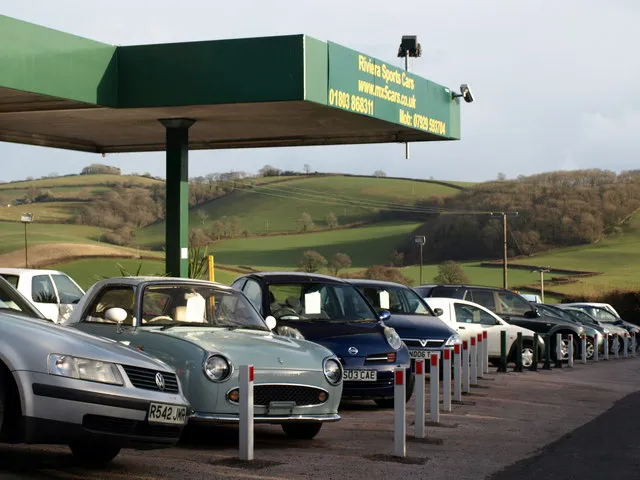
Photo: Lewis Clarke, CC BY-SA 2.0, via Wikimedia Commons
Most of us do the forecourt bit properly. We check the panels, squint at the tyres, take a test route that includes a bit of everything and ask whether the cambelt has been done. Then we sign, drive away and discover that the warranty is a phone number, a policy number and a form that asks us to describe the fault in 50 words or fewer.
The car is only half the deal. The other half is what happens when something goes pop three weeks later. You do not need a dealer to promise the earth. You need to know how their after-sales desk actually behaves when a claim lands on it. A 15-minute conversation before money changes hands tells you more than a glossy warranty leaflet ever will.
Start with who actually backs the warranty
Ask a simple question: is this the dealer’s own warranty, a third-party policy, or an extended manufacturer scheme? Then ask who pays if a claim is approved. A dealer-run warranty can be fine, but you want to know whether it is administered in-house or farmed out to a claims company. If it is a third-party policy, ask for the policy booklet before you pay a deposit. Not a summary. The booklet.
Check the underwriter or insurer named in the documents. Check the claim limit, the excess and the start and end dates. Ask whether the warranty can be transferred if you sell the car privately, and whether it can be cancelled. If the salesperson says ‘don’t worry, it’s all covered’, that is not an answer. It is a mood. Ask for the wording.
The diagnostic fee question
This is where plenty of used-car warranties get sticky. Many policies require you to pay a diagnostic fee upfront. If the claim is approved, the fee is usually refunded or folded into the repair. If it is not approved, you may be left paying for someone’s time and a report you did not want.
Ask exactly how much the diagnostic fee is, who sets it, and whether it is capped. Ask what happens if the fault turns out to be wear and tear or an exclusion. Do you get a written report? Can you take the car elsewhere for a second opinion? Get the answer in writing, even if it is just an email summary. A warranty desk that cannot explain its own diagnostic process is not a warranty desk. It is a call centre with a hold button.
Approved repairers and the geography problem
Ask where the car can be repaired. Dealer workshop only? A national network? Any VAT-registered garage? The answer changes everything. If the nearest approved repairer is 40 miles away, a simple fault becomes a day out. If the policy only pays a set labour rate, ask who covers the difference when your local garage charges more.
Ask for a list of approved repairers near your postcode. If there are none, that is useful information. Ask who pays for recovery if the car cannot be driven. Ask whether you can use your own garage and simply claim back the cost, or whether that voids the claim. The best time to find out is before the car is on your drive with a warning light on.
Courtesy cars, timelines and the boring bits
Ask what the target turnaround is for a claim. Not a guarantee—a target. Ask who authorises repairs, whether there is a claims line at weekends, and what happens if the repair takes three weeks. Is a courtesy car included? For how long? Is it subject to availability? What size is it? These questions feel dull until you are trying to get to work.
Also ask about consequential loss. If the air-con fails in July, does the warranty cover the repair only, or also the hire car you needed while it was in? Most policies cover the repair. That is fine, as long as you know.
Run the scenario test
Do not ask abstract questions like ‘is the warranty good?’ Give the desk three concrete scenarios and listen to the answers.
- The starter motor fails three weeks after collection, at 800 miles. Is it covered? What is the excess? Do I pay a diagnostic fee? Who authorises the repair?
- The air-con stops blowing cold in July. Is that wear and tear, a leak, or a covered component? What happens next?
- The infotainment screen dies. Is electrical kit included, and is there a separate claim limit for electronics?
Write the answers down. A good warranty desk will not mind. A shaky one will start talking about ‘the assessor’ and ‘the terms of the policy’ without ever landing on a number. That is your clue.
Get it in writing, politely
Ask the dealer to email a short summary: warranty provider, duration, claim limit, excess, diagnostic fee, approved repairer policy, courtesy car position and cancellation terms. Phrase it as a practical request, not an accusation: ‘Can you send that over so I’ve got it with the paperwork?’ Keep the email. If they will not put it in writing, treat that as a data point.
Remember that any warranty sits alongside your statutory rights. A dealer cannot use a warranty to dodge a fault that was there when you bought the car. But the warranty is still the thing you will be ringing about on a Tuesday morning, so it deserves a proper look.
Check the handover pack
At collection, ask for the warranty booklet, the claims number and the policy number. Check that the registration and VIN on the documents match the car. Save the claims number in your phone before you leave the forecourt. Photograph the documents. Ask who to call out of hours. A good used-car supermarket should be happy to walk you through this without treating it as a nuisance.
The warranty desk is a preview of ownership. Spend a quarter of an hour there before you spend the money. If the answers are clear, you have bought a car and a process. If they are not, you have learned something cheap.