When the Bumpers Meet: Test-Drive Cover, Excesses and Who Foots the Bill
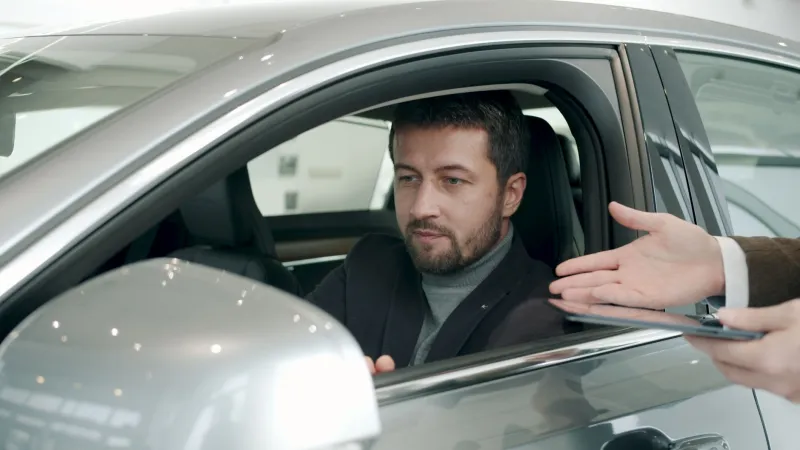
You are handed the keys, the salesman waves you off, and for the next ten minutes the car is yours to judge. Then you misjudge the exit ramp and put a crease in the rear quarter. Nobody is hurt, but somebody is paying. The question that matters is not who was nice about it on the forecourt. It is whose insurance was actually in force when the bumpers met.
Test-drive insurance is one of those subjects that feels boring until it is expensive. In the UK, the answer is rarely as simple as the dealer saying ‘you’re covered’. There are two policies potentially in play, and they do different jobs.
The two policies in the room
When you drive a dealer’s car, the dealer’s motor-trade policy may cover you. That is the business insurance that lets them lend cars, move stock and let customers drive. It can be perfectly valid cover, but it is not a personal comprehensive policy with your name on it. It will have conditions: age limits, licence requirements, perhaps a requirement that a member of staff is in the car, and usually an excess.
Your own comprehensive policy is the other possibility. Many UK policies include a ‘driving other cars’ extension, but that is often third-party only. It may also exclude cars you have hired, borrowed for reward, or that are owned by a motor trader. Read your certificate and policy booklet, not the summary on your phone. If you rely on your own cover, you need to know exactly what it does and does not pay for.
What dealer cover usually does and does not do
Motor-trade cover is designed for the trade, not for you. It may cover damage to the dealer’s car while you are on a permitted test drive, but it might also carry a hefty excess that the dealer can ask you to pay under a separate test-drive agreement. It may cover injury to other people, but it may not cover your personal belongings or an injury to you. It may only apply during a defined route or time. It may not apply at all if you are under 25, have held a licence for less than a year, or have points the dealer did not ask about.
That is why ‘our insurance covers you’ is not a full sentence. The useful version is: ‘Our motor-trade policy covers you, the customer, to drive this vehicle unaccompanied for 20 minutes, with a £500 excess payable by you if you damage it, and you must be 25 or over with a full UK licence held for two years.’ If the dealer cannot say that clearly, ask them to put it in an email.
Your own policy: the driving-other-cars trap
The ‘driving other cars’ extension is useful, but it is not a magic wand. It usually gives third-party cover only, which means it can pay for the other person’s car or injury, not the repair to the dealer’s car. It often applies only if the car is not owned by you, not hired to you, and not being used for business. Some policies restrict it to drivers over 25. Some do not include it at all.
If you cause a scrape while relying on your own third-party extension, the dealer’s insurer may still look to recover the repair cost from you. Your own insurer may deal with third-party claims, but it will not necessarily repair the test car. That is the gap that catches people out. Check your policy documents before you leave home, and if the extension is unclear, ring your insurer. A five-minute call is cheaper than a bodyshop estimate.
Age, licence and the small print
Trade policies often have tight driver criteria. Common restrictions include a minimum age of 25, a full UK licence held for at least two years, no more than six penalty points, and no drink-drive or dangerous-driving convictions. Some dealers will allow younger drivers only with a member of staff present, or not at all. Some will accept a provisional licence only on a supervised lesson, which is not a normal test drive.
Bring your driving licence. The dealer may also ask for a DVLA check code so they can view your endorsements. If you have points, tell them before the keys come out. Discovering a restriction after you have driven off is not a good look, and it can leave you uninsured.
Unaccompanied drives are not a free pass
Many dealers now let customers take a car alone. It feels relaxed, and it can be a better test of the car. But an unaccompanied drive puts more responsibility on you. If the dealer’s cover requires a staff member in the car, you are outside the terms the moment you pull away alone. If you are using your own insurance, make sure it actually covers you for this car, on this road, for this purpose.
Ask for written confirmation that you are insured to drive unaccompanied. A text or email from the dealer is better than a nod. If they cannot confirm it, take the accompanied drive or walk away. There will be other cars.
What to confirm before you accept the keys
Before any test drive, get clear answers to these points:
- Which insurer is covering the drive, and is it the dealer’s motor-trade policy or your own policy?
- Are you covered as the driver, and are you covered unaccompanied if that is the plan?
- What is the excess, and who pays it if the car is damaged?
- Are there age, licence, points or occupation restrictions?
- How long does cover last, and is there a set route?
- What should you do if there is an incident?
An email chain is ideal. Save it. If the dealer will not put it in writing, treat that as information too. A vague promise is not cover.
If something does happen
Stop in a safe place. Exchange details with anyone else involved. Take photos of the damage, the position of the cars and the surrounding road. Get witness details if you can. Do not admit liability at the roadside, even if you feel embarrassed. Tell the dealer immediately and notify your own insurer, even if you are not claiming. If anyone is injured or details are not exchanged, report it to the police. In the UK, failing to stop or report an accident can become a criminal matter, not just an insurance one.
Do not hand over cash for a forecourt scrape just because it feels easier. Ask for the claim to go through the correct policy, and ask the dealer to confirm the excess in writing. If they are reasonable, they will. If they are not, your insurer needs to know early.
A test drive is a small taste of ownership, but it is also a short-term insurance arrangement. Treat the paperwork as part of the test. At ALD Car Supermarket, we would rather you ask the awkward question before the engine starts than discover the answer after a wheel meets a kerb.