Rubber's Paper Trail: Dating a Used Car's Tyres Before You Trust the Advert
A seller tells you the car has 'four matching tyres with loads of tread'. Fine. Tread is the bit everyone looks at, and it's also the bit that gets replaced before a sale. The more interesting question is when those tyres were made. Every tyre sold in the UK carries a date code, and it's stamped into the sidewall for anyone patient enough to crouch down and read it.
At ALD Car Supermarket we spend a lot of time explaining used cars in plain English. Tyre dates are one of the most useful bits of evidence on a forecourt, and one of the most ignored. They don't care about the advert. They don't care about the valet. They just sit there, four digits at a time, telling you what happened before you arrived.
Where the date hides
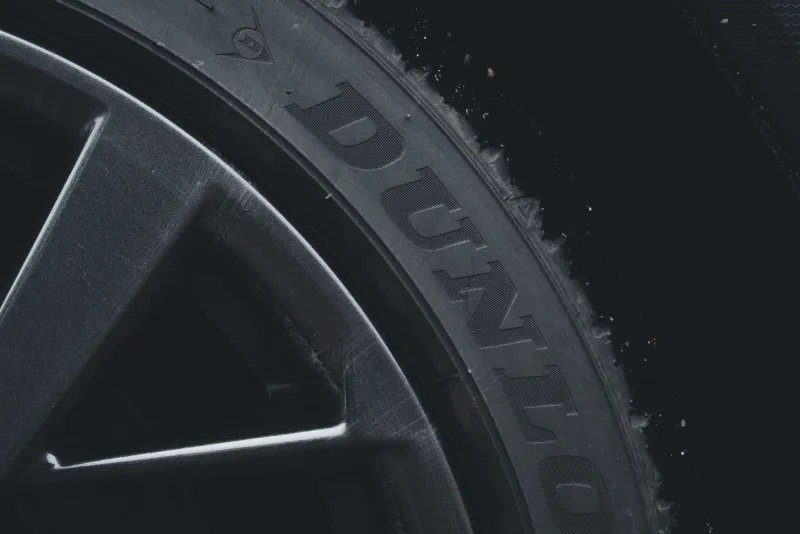
Have a look at the outer sidewall of each tyre. You're looking for the letters DOT, followed by a string of letters and numbers, ending in a four-digit block. That last block is the date.
The first two digits are the week of manufacture, from 01 to 52. The last two are the year. So 3221 means the 32nd week of 2021 — roughly early August. 0523 means the fifth week of 2023. It's not a secret code, but it is often printed on the inner sidewall instead of the outer one. If you can't find it on the outside of a tyre, don't assume it isn't there. It may be on the inside face, which means getting down and looking under the car or asking the seller to move it.
Anything with only three digits after the DOT is pre-2000. On a modern used car, that's not a date code worth debating. It's a tyre that belongs in a museum or a skip.
Four tyres, four stories
One date tells you when a tyre was made. Four dates together tell you a story.
If all four match, or sit within a few weeks of each other, someone probably bought a set. That could be good maintenance. It could also be a pre-sale tidy-up. The date alone doesn't settle it — you need the brands, the tread depths and the service history to build the full picture.
If the dates are all over the place, don't panic. Punctures happen. Kerbs happen. A single tyre replaced in 2024 on a car from 2019 is not a scandal. What matters is the pattern. One much newer tyre on a corner can point to a pothole, a kerbing incident or suspension damage. A tyre much older than the rest can point to neglect. Mixed brands on the same axle — one Michelin and one no-name budget tyre, same end of the car — is a genuine red flag. It suggests someone bought the cheapest thing that would hold air.
Have a look at the spare, too. If there is one. A 2012 spare in a 2026 car is not illegal, but it tells you the car has been kept on a budget.
The age question
Tyres age even when they sit still. UV light, ozone, heat and time harden the rubber. Most manufacturers suggest inspection from around six years and replacement by ten, regardless of tread depth. It isn't a legal limit, and the MOT doesn't test tyre age. But a ten-year-old tyre with 4mm of tread is not the same thing as a two-year-old tyre with 4mm of tread. Wet grip fades long before the tread does.
Check for cracking in the tread grooves and crazing on the sidewall. A low-mileage car with ancient rubber is a particular trap: it may have spent years parked, which is kind to the bodywork and unkind to the tyres. A car with 30,000 miles and twelve-year-old tyres is not a cherished find. It's a car that has been sitting about.
What mismatches really tell you
A mismatch is not automatically a deal-breaker. It is a question. Ask it plainly: 'This one's from 2025 and the rest are from 2021 — do you know why?' The answer tells you as much as the date code. A seller who shrugs and says 'no idea' may be honest, or may be uninterested. A seller who says 'puncture on the A34, kept the receipt' is giving you something you can check.
Be wary of a car that has been dressed rather than maintained. Four brand-new budget tyres fitted the week before sale, on a car with a patchy service history, is not a sign of care. It's a sign of someone spending £200 to make the advert look better. Four mid-range tyres fitted at sensible intervals over several years is a better story.
Using it at the viewing
Crouch down. Use your phone torch. Take a photo of each date code and write the four dates down. Check the tread depth while you're there — 1.6mm is the legal minimum across the central three-quarters of the tread, but anything under 3mm is worth pricing in. Check the pressures if you can. Don't kick the tyre. It's not a door.
Then use what you've found in the conversation, not as a performance. If all four tyres are old and cracked, that's a real cost and a real safety point. Ask for replacement or a price adjustment. If one tyre is odd but the car is otherwise sound, factor a sensible amount into your offer and move on. A pair of mid-range tyres fitted is £150 to £250, not a grand. Don't demand the earth for a £60 issue. That's tyre-kicking, and it wastes everyone's time.
The point isn't to catch the seller out. It's to understand the car. Tyre dates are one of the few bits of evidence that don't lie. They tell you how the car was kept between services, and whether the person selling it was thinking about safety or just about the photograph. If the dates don't add up, ask. If the answers don't add up, walk. If the car is sound and the tyres are simply due, price it in and get on with it.
Checked and explained. That's the idea.