Stamps Aren't a Story: Why a Full Service Book Can Still Hide the Truth

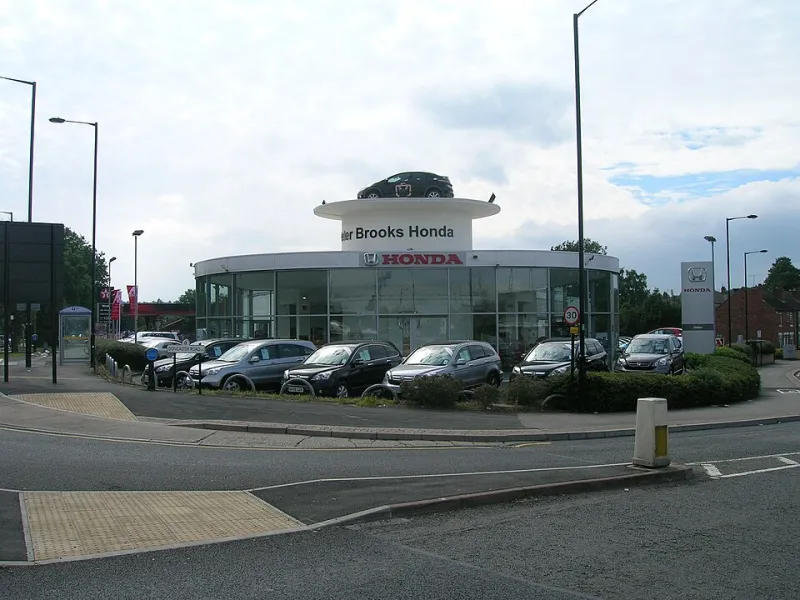
Photo: Crisco 1492, CC BY-SA 4.0, via Wikimedia Commons
There's a moment in every used-car viewing where the seller produces the service book, fanning the pages like a winning hand. Stamps at 9,000, 19,500, 31,000, all neat, all in the same ink. It's persuasive. It's also, on its own, close to meaningless.
A stamp tells you a garage had the car on its premises and got paid. That's it. It doesn't tell you what grade of oil went in, whether the filter was actually changed, whether the technician flagged a weeping seal they didn't get authorisation to fix, or whether the car did those miles on a motorway commute or three years of two-mile school runs.
In 2026, with used values still firm and buyers doing more homework than ever, the service book is the last part of the inspection people still take at face value. It shouldn't be.
What a stamp legally proves
Very little, in truth. A dealer stamp is a commercial record, not a warranty of condition. What it does give you is a date, a mileage and a garage name — and those three things are genuinely useful, because they can be cross-checked. The problem is that most buyers stop reading at the smiling face and the rubber stamp.
Digital histories and their blind spots
The shift to digital service records was supposed to fix all this, and in some ways it has: manufacturer portals hold dates, mileages and job codes that are hard to fake. If a car has been serviced within the franchised network, you can usually get a printout from a dealer with the VIN on it. Ask for it, and ask for it before you view, not after you've fallen for the paintwork.
The blind spot is what happens outside the network. Plenty of perfectly well-maintained cars live at independent garages that never upload to the manufacturer system. So a digital record that stops at 42,000 with the car now on 78,000 doesn't automatically mean four years of neglect — but it does mean you need paperwork for those years, and a vague 'my mate looks after it' is not paperwork.
Missing history isn't automatically a walk-away. Missing history with no explanation, on a car priced like a fully documented one, is a different matter.
Invoices tell you what a stamp can't
An invoice is the document that earns its keep. What you want from each one: the date, the mileage at the time, the registration or VIN, the itemised parts (with oil specification), the labour, and the garage's details.
Why the fuss? Because two invoices can both say 'full service' and mean very different things. One might list oil, filter, air filter, pollen filter, brake fluid and a full inspection. The other might be an oil and filter change with a tick in a box. Same stamp in the book. Different car underneath.
If a seller can only produce stamps and no invoices, you're buying a promise. Factor that in.
Cross-check the dates against the mileage
This is where a service history starts talking. MOT records give you an annual mileage snapshot, free, on the DVSA site. Line those up against the service stamps.
A car that gains 18,000 miles between MOTs but has a stamp six weeks earlier showing only 400 miles less than the current reading is fine. A car with a stamp dated March at 52,000 and an MOT in April at 49,800 deserves a question. Clocks get altered far less often than people fear, but paperwork gets 'tidied' more often than you'd like.
Also look at the cadence. A car doing 15,000 miles a year with a service every 18 months has been running well past its oil's useful life, whatever the handbook says.
Four gaps that should move your offer
Cambelt or wet belt. A belt-driven engine with no evidence of a change is a £400–£900 job waiting to happen, and a snapped belt is an engine. Ford's 1.0 EcoBoost wet belt is the famous example — the official interval looks generous, the real-world one often isn't. If it's due or overdue, that's money off or a walk.
Brake fluid. Should be changed roughly every two years regardless of mileage, because it absorbs water. It's cheap, so nobody does it. Absence isn't fatal, but it tells you the servicing has been reactive rather than thorough.
Gearbox oil. Often listed as 'sealed for life'. Ask any independent transmission specialist what they think of that phrase. A DSG or dual-clutch unit without a fluid change around 40,000 miles is a risk you should price in.
Coolant and auxiliary belts. Long intervals on paper, but the parts are old by the time a used car reaches you. Look for evidence anyone has looked beyond the oil.
Long-life oil and the school run
Here's the bit I'd argue matters more than any stamp. A car on a 20,000-mile variable interval, used for short trips with a cold engine, is being slowly punished. Condensation in the sump, fuel dilution, a diesel particulate filter that never gets hot enough to regenerate.
The same schedule on a motorway mile-muncher is genuinely fine. So when you're reading the history, ask what the car actually did. If it's a low-mileage diesel with a stamp every two years and a lot of town work in between, an annual oil change isn't a nice-to-have — it's the difference between a sound engine and a expensive one.
Turning it into a number
Don't argue about the history; convert it into pounds. Belt due: knock the quote off. No invoices for three years: price it as a car with unknown servicing. Missing gearbox oil change on a DSG: get a specialist quote and subtract it. If the seller won't move and the gaps are real, there are other cars.
A stamped book is a comfort blanket. A folder of invoices, a digital printout with the VIN on it and MOT mileages that line up — that's an actual story. Buy the story.