Before You Sign: Put a Price on the Second Key
Walk around any used car forecourt and you will hear a version of the same line: 'It only comes with the one key, but that's normal.' It is common, yes. Normal? Less so. A second key is part of the car's kit, and when it is missing you are not just short of a fob — you are carrying a future cost, a security question and a small dose of inconvenience that tends to arrive at the worst possible moment.
The trick is to treat the missing key as a line item, not a footnote. Do that and a single-key car can still be a good buy. Ignore it and you may spend the first month of ownership ringing round auto locksmiths.
One key, one deferred bill
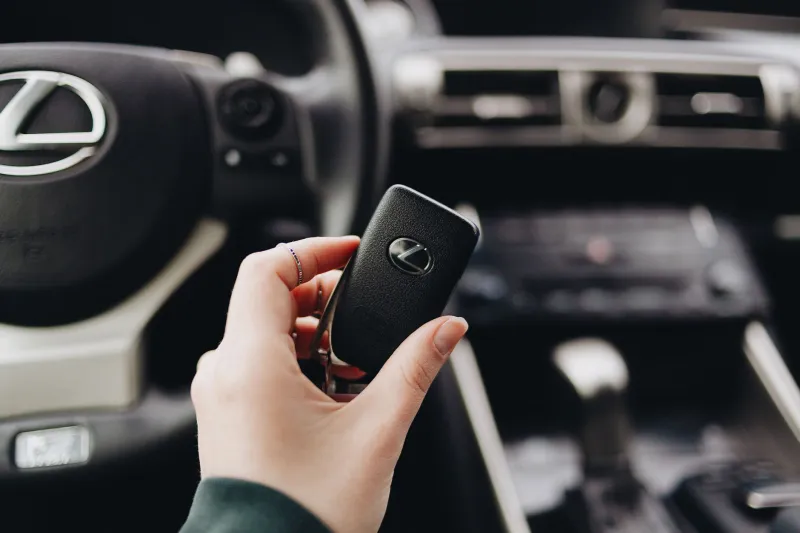
A modern car key is not a lump of metal with a button on it. It contains a transponder chip that talks to the immobiliser, a remote circuit for the central locking, and — on keyless cars — proximity hardware that lets the car start without the fob leaving your pocket. Replacing it means buying the right blank, cutting the blade if there is one, and coding the new key to the car.
That coding is where the money hides. Some cars will accept a new key after a simple learn procedure. Others need a security PIN, a dealer-level diagnostic tool or an online connection to the manufacturer. If you have only one key, the job can also mean erasing the lost key from the car's memory so it can no longer start the engine. That is sensible security, but it is more labour.
So when a seller shrugs at a single fob, the fair response is not a shrug back. It is a question: what would it cost to put this right?
What a replacement key really costs in 2026
The figures below are ballpark UK costs for a second key, including cutting and coding where needed. They move with model year, key type and whether the car needs a dealer visit. Treat them as negotiation ammunition, not gospel.
| Common UK used car | Independent auto-locksmith | Main-dealer ballpark |
|---|---|---|
| Ford Fiesta | £120–£220 | £180–£300 |
| Vauxhall Corsa | £100–£200 | £180–£280 |
| Volkswagen Polo / Golf | £150–£280 | £250–£400 |
| Nissan Qashqai | £200–£350 | £300–£450 |
| Toyota Yaris | £150–£300 | £250–£400 |
| Kia Sportage / Hyundai Tucson | £180–£320 | £250–£450 |
| Mini | £250–£450 | £350–£600 |
| BMW 3 Series | £300–£550 | £450–£700 |
| Audi A3 | £280–£500 | £400–£650 |
| Mercedes A-Class | £300–£550 | £450–£700 |
A cheap-ish Ford or Vauxhall key might be a £150 problem. A German premium car with a smart key can be a £500 problem before you have even factored in the time off the road. On a £6,000 car, a £400 key is more than six per cent of the purchase price. That is not a rounding error.
The lost-key scenario nobody budgets for
Here is the bit that rarely makes it into the advert. If you buy a one-key car and then lose that key, the car does not simply become inconvenient. It becomes immobile. You cannot drive it to a locksmith. You need recovery, proof of ownership and usually a dealer or specialist who can code a fresh key on site or in a workshop.
That can mean a recovery fee, a key bill and a day or two without the car. On a keyless model, there is also a security angle: a lost fob may still be able to start the car until it is erased from the system. Some insurers ask how many keys came with the vehicle, and a single-key car can raise an eyebrow. Check your own policy wording before assuming it is irrelevant.
None of this is a reason to walk away from every one-key car. It is a reason to price the risk properly.
The five-minute key audit
Before you agree a deal, put the key through its paces. Do not just look at it on the desk.
- Count every key. That means fobs, valet keys, emergency blades and any key code tags. Ask the seller to confirm the count in writing.
- Test the remote. Lock and unlock from a few metres away. Try the boot release if the fob has one. Watch for a weak red LED or a button that needs a firm press.
- Start the car with each key. If there are two, use both. Then switch off, walk away and try the keyless start again if applicable.
- Check the blade and casing. A cracked fob can still work today and fail next month. A missing blade is a cost on top of coding.
- Look for dashboard warnings. 'Key not detected' or a low key battery message tells you something. A new battery is cheap; a failing fob is not.
- Ask for the key code card. Some cars came with a tag or card for cutting a replacement. If it is missing, the job gets harder.
If the seller will not let you test both keys, that is information in itself.
How to use it at the negotiating table
Get a written quote for a second key before you shake hands. An independent auto locksmith is often the cheapest route, but not every model can be done outside the dealer network. Use the quote as a discount target, or ask the dealer to supply and code the second key as a condition of sale.
Be specific: 'second key supplied, cut and programmed before collection' is better than 'we'll sort a key out'. If you are buying privately, reduce your offer by the quote plus a bit for the hassle. A missing fob is not a reason to be dramatic — it is a reason to be precise.
The bottom line
A used car with one key is not automatically a bad car. But it is a car with an unfinished job attached. Price that job, test the key you have, and make the second key part of the deal rather than a surprise after it. The maths is simple enough: a few hundred pounds off today is a lot easier to swallow than a locksmith, a recovery truck and a dealer bill later.